

Iran’s ethnic and religious minorities could play a decisive role in challenging the regime and reshaping the country’s political future.
Azerbaijani political prisoner sentenced to death
WSJ: US ties Chinese satellite imagery to deadly Iran-linked strike
Reuters: Pakistan faces pressure to choose side as Saudi-Houthi tensions escalate
Another Baluch man killed in Iran
Pezeshkian says he does not support prolonging war with US
Six prisoners executed in two Iranian cities
Anthropic: Iran-linked accounts used Claude in IRGC influence campaigns
Bloomberg: IAEA Detects New Activity at Iran’s Pickaxe Mountain
Turkey Today: Pakistan May Strike Houthi Positions in Yemen
New Wave of Protests Possible in Iran — Joint Exercise to Be Held in Tehran
Reuters: Iran Used China-Based Mechanism to Move Up to $2.5 Billion Around Sanctions
Trump Advisers Warn Iran War Could Extend Through 2029, WSJ Reports
Tehran IRGC Commander Says Forces Ready for Rapid Offensive Operations
Social Media Activists Arrested in Iran
The Economist: Iran’s Proxy Groups in the Middle East Are Drifting Away from Tehran
Cleric Killed in Khana
Basij Commander Killed in Sistan and Baluchestan
“Koroghlu” Performance Heads to Tehran After Breaking Records in Tabriz
New Hijab Rules to Be Introduced for Female Students in Iran
Healthcare Workers in West Azerbaijan Not Receiving Salaries
Aida Heydari Ended Her life by Suicide Eight Months After Her Fiancé’s Death
Ten More Arabs Arrested in Iran
Iran Situation Tops BRICS Political Agenda — Russian Diplomat
IAEA Says It Has Lost Access to Key Iranian Nuclear Sites
Two Police Officers Killed in Zahedan
UAE Says Energy Exports Will Not Be Held Hostage in Hormuz
Latest Execution Statistics in Iran
Jerusalem Post: A united front stands against Iran’s mullahs and their brutal regime - opinion
Tehran mayor warns Iran could weaken from within without reform
Zanjan Social Media Activist Tried in Rasht
Armed Clash in Iran Leaves Dead
Huckabee: Iran could face another strike if it refuses to back down on nuclear program
Kremlin rejects US warning over Russia-Iran ties
Iran deputy speaker calls for targeting US economic interests in region
Five More Baha’is Arrested in Karaj
Israel’s Katz warns Iranian attack could trigger strikes on infrastructure
Six More Prisoners Executed in Iran
Reuters: Iran Warns US Against Israeli Offensive in Southern Lebanon
Kayhan Newspaper: Iran Should Cut Internet Cables in the Arabian Gulf
Israel Says Hamas Internal Security Chief Detained in Gaza City
Prisoners in Iran Resume Hunger Strike
School Supplies Become More Expensive Again in Iran
Reuters: U.S. May Intensify Attacks Against Iran After Midterm Elections
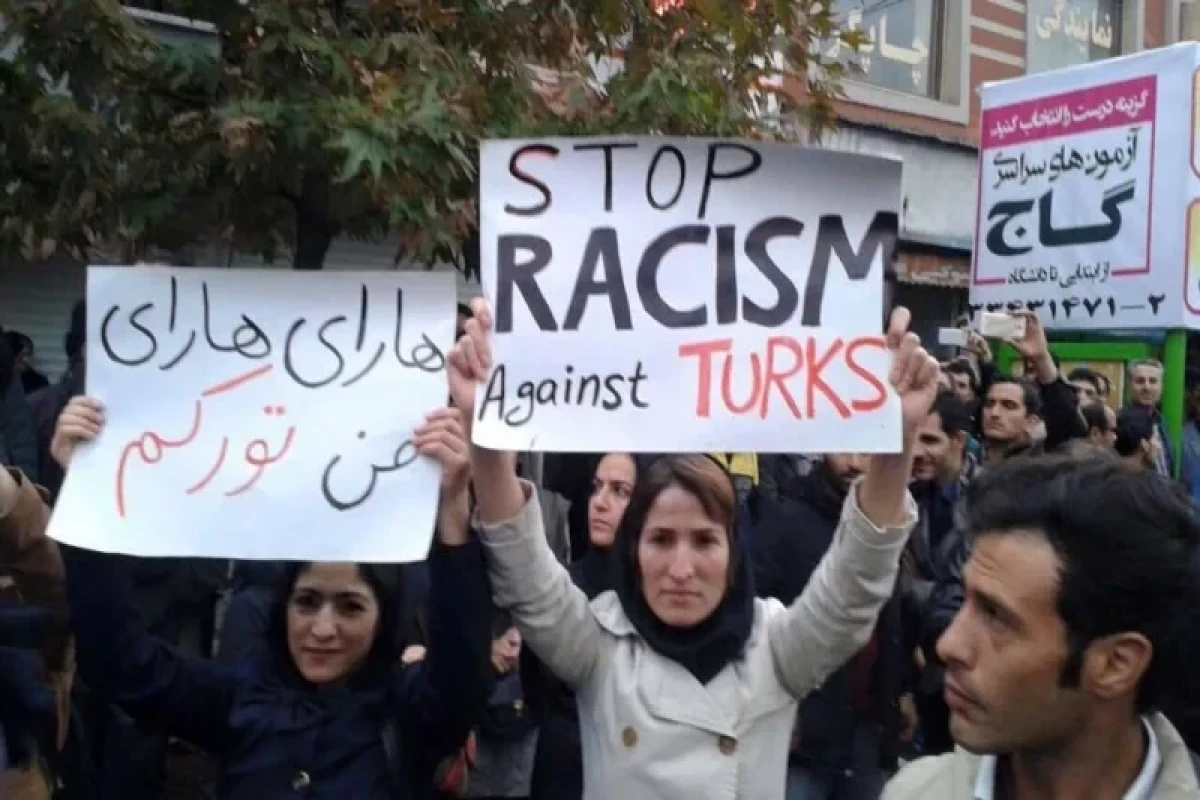
Iran’s ethnic and religious minorities could play a decisive role in challenging the regime and reshaping the country’s political future.
The Islamic Republic of Iran, a regime that routinely chants “Death to America” and “Death to Israel” while building up terror proxies in Gaza, Lebanon, Yemen, Iraq, and elsewhere across the Middle East, poses an existential threat to the State of Israel and a major threat to the United States, Europe, and the broader free world.
The most effective strategy to confront the Islamist regime would be to weaken the country from within, striking the Iranian regime where it is most vulnerable.
Iran is an extremely diverse country composed of numerous ethnic groups. Some estimates suggest that fewer than 40% of Iran’s population is actually Persian. The rest of the country consists of Azerbaijanis, Kurds, Ahwazi Arabs, Baloch, Turkmen, Lors, and Tajiks, many of whom demand either independence or a federal system that would grant them greater influence over political affairs.
Notably, 80% of Iran’s oil and 60% of its natural gas reserves are located in Khuzestan, home to Iran’s largest Arab minority, the Ahwazi Arabs. Prior to 1924, the Ahwazi Arabs maintained an independent emirate, but Reza Shah Pahlavi dissolved it.
Ever since, many Ahwazi Arabs have opposed what they view as Persian hegemony over their region. In their view, the Iranian regime has mismanaged the area, contributing to widespread unemployment and severe water shortages.
Tensions within Iran are not solely ethnic. According to Iran’s constitution, Sunnis cannot become President of Iran or Supreme Leader. Sunni Muslims are also barred from building mosques in Tehran.
Membership in the Baha’I faith is effectively criminalized, despite the fact that BahaʼI’s constitute the largest non-Muslim religious minority in Iran and that the faith originated in Persia. BahaʼI holy sites are frequently vandalized, and BahaʼI individuals are often arrested, imprisoned, or otherwise persecuted.
Evangelical Christians are forced to establish house churches because the Iranian regime does not officially recognize their religious rights. In the eyes of the regime, only Armenian, Assyrian, and certain Orthodox churches are permitted to operate openly. As a result, grievances among Iran’s religious minorities continue to grow.
Since the Green Movement erupted in 2009, many Iranians have demanded freedom from the rule of the clerical regime. In recent years, five major nationwide protest movements have challenged the government. These protests heavily involved the country’s ethnic minority regions.
Washington has searched for a unified opposition movement capable of toppling the regime, but such a movement has not emerged, largely because Iran is a multi-ethnic nation with competing political visions.
While some Western leaders have rallied around Reza Pahlavi, it is important to recognize that he has limited support among Iran’s ethnic and religious minorities, which together comprise a substantial portion of the population. Consequently, relying solely on him as the face of opposition may be strategically flawed.
Instead, Washington should consider supporting a broader coalition made up of Ahwazi Arabs, Kurds, Baloch, Lors, Azerbaijanis, Turkmen, and Tajiks in order to build a united front against the clerical regime.
The future of Iran may lie not in the continuation of the Islamic Republic, but in a federal or confederal system in which ethnic groups are granted meaningful autonomy. Some groups, such as Azerbaijanis, may even seek the option of closer political alignment with neighboring Azerbaijan. Proponents of this view argue that anything short of structural decentralization could result in a prolonged conflict between Iran and the West lasting generations.
Persian nationalists often point to events from 2,500 years ago, including the long wars between the Romans and the Persians, arguing that foreign powers historically failed to conquer Iran despite prolonged military campaigns.
However, supporters of decentralization argue that Arabs from the Arabian Peninsula succeeded in transforming Iran not merely through conquest, but by replacing the Sassanid ruling order with new local structures.
From this perspective, empowering local ethnic groups represents the most viable path toward lasting political change. Anything else, they argue, risks creating a prolonged and unresolved struggle.
Until 1925, Turkic dynasties mostly from South Azerbaijan ruled large territories including present Iran for nearly a millennium. The dominance of Persian nationalism is therefore viewed by some as a relatively modern phenomenon.
Iran’s ethnic groups each possess histories of self-governance and remain wary of centralized Persian authority. Many retain nostalgia for earlier eras in which Persian dominance was less pronounced. Advocates of decentralization argue that Iran should revive forms of governance that historically accommodated its ethnic diversity, rather than continue repeating unsuccessful attempts to reform or replace the current regime through centralized opposition movements.
Iran is not a monolithic nation-state but a deeply diverse society made up of numerous ethnic and religious communities, each with its own history, identity, and political aspirations. The tensions that exist within the country today are not merely political disputes with the ruling regime, but also reflect long-standing grievances over centralization, discrimination, and unequal representation.
Any serious attempt to reshape Iran’s future must take these realities into account. A political structure that recognizes regional autonomy, ethnic diversity, and religious freedom may offer a more sustainable path toward stability than continued centralized rule under either the current regime or another Persian-Shia-centred, heavily nationalist government.
By AHMAD OBALI
Azerbaijani political prisoner sentenced to death
WSJ: US ties Chinese satellite imagery to deadly Iran-linked strike
Another Baluch man killed in Iran
Six prisoners executed in two Iranian cities
Bloomberg: IAEA Detects New Activity at Iran’s Pickaxe Mountain
New Wave of Protests Possible in Iran — Joint Exercise to Be Held in Tehran
Trump Advisers Warn Iran War Could Extend Through 2029, WSJ Reports
Tehran IRGC Commander Says Forces Ready for Rapid Offensive Operations
Cleric Killed in Khana
“Koroghlu” Performance Heads to Tehran After Breaking Records in Tabriz
Healthcare Workers in West Azerbaijan Not Receiving Salaries
Ten More Arabs Arrested in Iran
IAEA Says It Has Lost Access to Key Iranian Nuclear Sites
UAE Says Energy Exports Will Not Be Held Hostage in Hormuz
Jerusalem Post: A united front stands against Iran’s mullahs and their brutal regime - opinion
Armed Clash in Iran Leaves Dead
Kremlin rejects US warning over Russia-Iran ties
Iran deputy speaker calls for targeting US economic interests in region
Six More Prisoners Executed in Iran
Kayhan Newspaper: Iran Should Cut Internet Cables in the Arabian Gulf
New Hijab Rules to Be Introduced for Female Students in Iran
Tehran mayor warns Iran could weaken from within without reform
UAE Says Energy Exports Will Not Be Held Hostage in Hormuz
Jerusalem Post: A united front stands against Iran’s mullahs and their brutal regime - opinion
IAEA Says It Has Lost Access to Key Iranian Nuclear Sites
Two Police Officers Killed in Zahedan
Aida Heydari Ended Her life by Suicide Eight Months After Her Fiancé’s Death
Turkey Today: Pakistan May Strike Houthi Positions in Yemen
New Wave of Protests Possible in Iran — Joint Exercise to Be Held in Tehran
Latest Execution Statistics in Iran
Healthcare Workers in West Azerbaijan Not Receiving Salaries
Reuters: Iran Used China-Based Mechanism to Move Up to $2.5 Billion Around Sanctions
Iran Situation Tops BRICS Political Agenda — Russian Diplomat
Bloomberg: IAEA Detects New Activity at Iran’s Pickaxe Mountain
Basij Commander Killed in Sistan and Baluchestan
The Economist: Iran’s Proxy Groups in the Middle East Are Drifting Away from Tehran
Reuters: Pakistan faces pressure to choose side as Saudi-Houthi tensions escalate
Trump Advisers Warn Iran War Could Extend Through 2029, WSJ Reports